Yes, You Can Make Waffles Without a Waffle Maker (Here's How)
You don't need a waffle iron sitting in your cabinet to eat a waffle this weekend. Grab a panini press, a ridged grill pan, a silicone mold and your oven, or even just a regular skillet — all four get you there. Not all the same way, though. Some give you those deep, syrup-catching pockets. Others give you more of a grid-marked pancake situation. Both are legit. Both taste like waffles, because guess what — it's the same batter either way.
Here's what's coming up: why people end up needing a waffle-maker-free method in the first place, what to actually expect texture-wise, and four different tools (all available on Amazon right now) that'll get the job done depending on what you've already got in your kitchen.
Why Someone Might Need to Make Waffles Without a Waffle Maker
Not everyone owns a waffle iron. Shocking, I know.
Common Situations Where This Comes Up
Maybe you never bought one. Maybe yours died last month and you haven't replaced it yet (happens more than you'd think — those non-stick coatings don't last forever). Or maybe you're in a rental, a dorm, someone else's kitchen, and the appliance drawer is just… not stocked. Whatever the reason, the craving doesn't care. You want a waffle. Today. Not after a trip to the store.
What to Expect Texture- and Flavor-Wise Without a Dedicated Waffle Iron
Let's be honest upfront. Grid marks might be shallower. Pockets might not run as deep as a true Belgian iron gives you. That's just physics — an enclosed, pressurized waffle iron shapes batter differently than an open pan or a mold ever could.
But flavor? Identical. Same batter, same ingredients, same result on your tongue. The cooking surface changes the shape and maybe the crispness. It doesn't touch the taste.
Can You Make Waffles Without a Waffle Maker Using a Panini Press or Sandwich Grill?
Yes — a panini press is honestly your closest substitute, and here's why: it presses from both sides at once, just like a real waffle iron does.
How a Panini Press Mimics a Waffle Iron
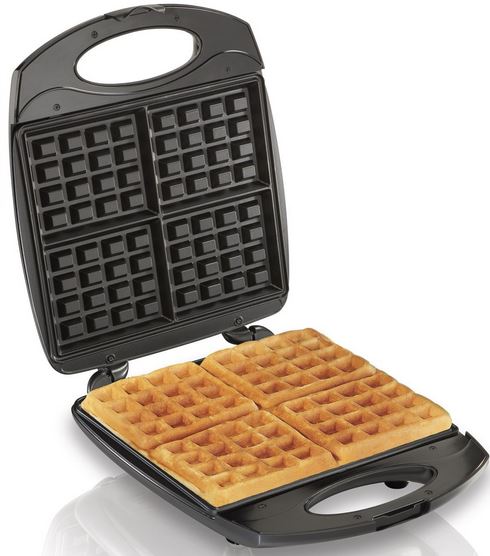
Think about what a waffle iron actually does mechanically. Two heated plates, batter in the middle, contact pressure from top and bottom. A panini press does the exact same thing. Some systems (Cuisinart's Griddler line, for one) even sell dedicated waffle plate attachments that swap right in. That's not a coincidence — the underlying mechanism is basically identical.
Best Panini Press/Griddler for Making Waffles Without a Waffle Maker
Cuisinart Griddler 5-in-1 with Waffle Plates (GR-4N or GR-4NP1 Bundle)
This is the real deal. Not a workaround — an actual waffle maker in disguise.
- What it is: A multi-function countertop grill and panini press that turns into a genuine waffle maker once you add the optional waffle plate attachment.
- Features: 5-in-1 functionality (contact grill, panini press, full grill, full griddle, half-and-half mode). Reversible, dishwasher-safe nonstick plates. The waffle attachment bakes four deep-pocket, ¾-inch thick Belgian-style waffles — not shallow grill marks, actual pockets. Dual temperature controls and a floating hinge for even contact across the whole surface.
- Price: Base unit runs roughly $80–$100. Waffle plates alone, about $30–$40. Bundled together, expect somewhere around $110–$130 (check current Amazon pricing, it moves around).
- Pros: Genuinely produces true waffle shapes, syrup pockets and all. And since it's five appliances in one, it earns its keep well beyond waffle mornings.
- Cons: Pricier than a dedicated waffle maker if you're buying the plates separately. Takes up more cabinet space too.
- Best for: Anyone who wants one appliance replacing a grill, a panini press, a griddle, and a waffle maker — instead of buying four separate things.
Standard Panini Press Without Waffle Plates (Grill-Marked Method)
Already own a panini press for sandwiches? Good. You're basically done shopping.
- What it is: Any basic contact panini press or sandwich grill, repurposed to cook waffle batter directly. You won't get deep pockets — you'll get grill-marked ridges instead.
- Features: Nonstick ridged plates, a floating top plate that adjusts to batter thickness, fast preheat times, compact footprint.
- Price: Roughly $30–$50 for a basic model.
- Pros: Cheap if you already own one. The ridges do give a waffle-adjacent look and texture — close enough for a Tuesday morning craving.
- Cons: No deep pockets means syrup runs off faster instead of pooling. It's a decent stand-in, not a perfect match.
- Best for: Someone who's not buying anything new and just wants to use what's already sitting on the counter.
Can You Make Waffles Without a Waffle Maker Using a Stovetop Pan?
Yes, and a ridged grill pan is probably the most old-school, no-frills way to do it — no electricity required, just your stovetop.
How a Ridged Grill Pan Creates a Waffle-Like Texture
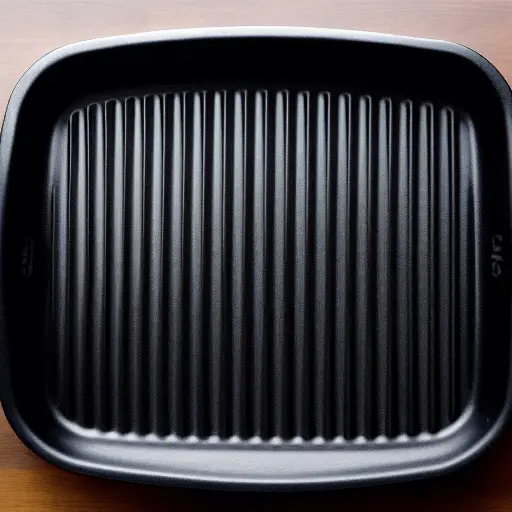
The ridges do the work here. Batter sits in the grooves, heat comes up from below, and you get those signature grid lines pressed into one side. Only one side, though — unlike an enclosed waffle iron, you've got to flip this thing partway through, just like you would a pancake.
Best Stovetop Pan for Making Waffles Without a Waffle Maker
Lodge Square Cast Iron Grill Pan (10.5-Inch)
Honestly? This is the workhorse pick. Not just for waffles — for basically everything.
- What it is: A pre-seasoned, ridged cast iron grill pan built for stovetop searing, repurposed here to cook waffle batter with grid-mark texture.
- Features: Raised ridges that mimic waffle iron grid lines. Pre-seasoned surface that's naturally non-stick when cared for properly. No PFOA, no PTFE. Oven-safe, stovetop-safe, and yes — it'll even work over an open flame if you're feeling adventurous.
- Price: Roughly $25–$40 (verify current listing).
- Pros: Built like a tank. Gets better with age and use. Doubles as your go-to pan for steaks, veggies, grilled sandwiches — not a one-trick pony.
- Cons: You've got to babysit it a bit more than an enclosed waffle iron — flipping, watching for hot spots, that kind of thing. Needs occasional reseasoning too.
- Best for: People who already love cooking with cast iron and want a pan that does ten things, not just one.
How to Cook Waffle Batter in a Regular Non-Stick Skillet (No Ridges Needed)
No ridges? No cast iron? Fine. A flat non-stick skillet still works.
You won't get grid marks — what you'll get is basically a thick, round, waffle-flavored pancake. And honestly? For a lot of people that's completely fine. Same taste, same ingredients, different shape. If you've got zero specialty cookware and just want the flavor of a waffle without buying a single new item, this is your move.
Can You Make Waffles Without a Waffle Maker Using the Oven?
Yes — pour the batter into a shaped mold, stick it in the oven, and let baking do what griddling normally does.
How Baking Waffle Batter in the Oven Works
This one's a little different from the others. There's no direct contact heat searing the surface, so the result leans more cake-like on the inside compared to the crisp exterior you'd get from a stovetop or press method. Not worse. Just different. Some people actually prefer it.
Best Silicone Waffle Mold for Making Waffles Without a Waffle Maker
Silicone Waffle Mold, 2-Cavity Belgian-Style (Oven-Safe)
This is the budget champion of the whole list. Seriously — you can't beat the price.
- What it is: A flexible, food-grade silicone mold shaped like deep-pocket Belgian waffles, made for oven baking rather than stovetop cooking.
- Features: BPA-free silicone, oven-safe up to around 450°F, non-stick surface for clean release, and it's dishwasher, freezer, and microwave safe too.
- Price: Roughly $8–$15 for a 2-pack.
- Pros: Dirt cheap. Zero electricity needed. Cleanup takes seconds. Bonus — it works for chocolate bark and muffins too, not just waffles.
- Cons: Only the bottom side gets grid marks since it's baked flat, not pressed from both directions. Texture skews more cake-like than crisp-edged.
- Best for: Dorm rooms, tiny kitchens, or anyone without stovetop cookware who still wants that pocketed waffle shape.
Step-by-Step: Baking Waffle Batter in a Silicone Mold
- Preheat your oven to around 400°F — don't skip this, cold-oven baking gives you pale, gummy results
- Set the silicone mold on a baking sheet first, for stability (silicone alone is floppy and hard to move once filled)
- Fill each cavity about ¾ full — batter rises, and overfilling means a mess in your oven
- Bake roughly 15–20 minutes, checking for a golden, set top
- Let it cool for a minute or two before flexing the mold to pop the waffles out
Step-by-Step: How to Make Waffles Without a Waffle Maker (General Method)
Preparing the Batter
Good news — you don't need a special recipe. Your standard waffle or pancake batter works across all these methods. One small tweak: go slightly thicker than you normally would. Thin, runny batter is great inside an enclosed waffle iron. On an open pan or press? It just spreads everywhere and thins out unevenly.
Cooking on a Panini Press or Grill Pan
Preheat fully. This matters more than people think — a cold or half-warm surface gives you pale, sticky results no matter which method you're using. Grease with real butter or oil (skip the aerosol spray, it gunks up non-stick coatings over time — that's a whole separate issue, but worth knowing). Close the press and let it do its thing, or flip halfway through if you're on an open pan, watching for that golden color on both sides.
Cooking in the Oven with a Mold
Follow the mold instructions above pretty much exactly. Check for doneness the same way you'd check a cake or a batch of muffins — toothpick in, toothpick out clean, you're done.
Common Mistakes When Making Waffles Without a Waffle Maker
| Mistake | Why It Wrecks Your Waffle |
|---|---|
| Batter's too thin | Runs everywhere on an open pan or press — enclosed waffle irons hide this flaw, open surfaces don't |
| Skipping the preheat | Pale, sticky, unevenly cooked — every method, no exceptions |
| Overfilling the silicone mold | Batter expands as it bakes, overflow city if you go past ¾ full |
| No grease on cast iron or panini plates | Even "non-stick" surfaces need a little help sometimes |
Using Batter That's Too Thin for an Open Surface
An enclosed waffle iron hides a multitude of sins — thin batter just fills the grid and cooks. Open pan? Different story. It spreads thin, cooks unevenly, and you lose that thicker, fluffier interior everyone actually wants from a waffle.
Not Preheating the Cooking Surface Fully
Doesn't matter which method you're using. Cold surface equals sticking, pale color, and batter that just sort of sits there instead of setting up properly. Give it the full preheat time. Always.
Overfilling a Silicone Mold
Batter puffs up as it bakes — that's just what leavening does. Fill past ¾ and you'll be scraping overflow off your baking sheet (and possibly your oven floor, if you're really unlucky).
Skipping the Grease Step on Cast Iron or Panini Plates
Non-stick doesn't always mean stick-free, especially on cast iron that's due for reseasoning. A light coat of butter or oil before the batter goes on saves you the headache of scraping stuck waffle off a hot pan.