Yes, You Can Make Waffles Without Baking Powder (Here's How)
Out of baking powder? Doesn't matter. You've got four solid ways around it — baking soda plus something acidic, self-rising flour, whipped egg whites, or yeast if you've got time to spare. Each one gets you an actual waffle. Not all identical, though. Some give you that classic light crumb. Others go airier, or tangier, or take way longer to pull off.
So here's what's coming: why baking powder does what it does in the first place, all four substitute methods broken down, real products you can grab on Amazon for each approach, and the mistakes that turn a good substitution into a sad, flat waffle. Let's get into it.
Why Baking Powder Matters in Waffle Batter
What Baking Powder Actually Does in Waffles
Baking powder's whole job is producing carbon dioxide — fast — so your batter puffs up before it has any chance to just sit there and go dense. Waffles are unforgiving this way. Pancakes get a little grace period on the griddle. Waffles? Batter goes straight from bowl to hot iron, gets sealed shut, and whatever leavening's happening needs to happen right then. No do-overs once that lid comes down.
What Happens If You Skip Leavening Entirely
Skip it completely — no powder, no soda, no substitute of any kind — and you're looking at a flat, dense, chewy disc. Not a waffle. More like a savory cracker with syrup on it. Volume drops, texture turns heavy, and honestly the whole point of a waffle (that light, crisp-edged fluffiness) just disappears.
Can You Make Waffles Without Baking Powder Using Baking Soda Instead?
Yes — this is probably the most common workaround, and it's genuinely reliable once you know the ratio.
The Baking Soda and Acid Substitution Method
Rough rule of thumb: about ¼ teaspoon of baking soda replaces 1 teaspoon of baking powder. But — and this matters — soda alone won't cut it. You need an acid in there too. Buttermilk works. So does yogurt, lemon juice, vinegar, even brown sugar in a pinch (it's mildly acidic, believe it or not).
Why This Substitution Works Chemically
Baking soda's a base. Mix it with an acid and some liquid, and it reacts immediately, releasing the same carbon dioxide baking powder would've given you anyway. That's the whole trick — you're just building your own two-part leavening system instead of buying it pre-mixed. One catch: because the reaction starts the second everything touches, you've got to cook that batter right away. No letting it sit on the counter while you finish your coffee.
Limitations of the Baking Soda Substitution
Here's the thing — this only works if there's enough acid actually in the batter. Not "a little." Enough. Skimp on the acid and you'll get poor rise, plus that unmistakable metallic, soapy taste that ruins the whole batch. Nobody wants that. Get the ratio right, though, and honestly you'd never know the difference.
Can You Make Waffles Without Baking Powder Using Self-Rising Flour?
Yes, and this might be the laziest (in a good way) fix on this whole list.
What Self-Rising Flour Already Contains
Self-rising flour's basically flour, baking powder, and salt, pre-mixed at the factory. So technically? You're not "substituting" anything. You're just buying a flour that already solved the problem for you before it ever hit your pantry.
How to Adjust a Recipe for Self-Rising Flour
Two adjustments, that's it. Drop the added salt your original recipe calls for (it's already in there). Drop the baking powder too, obviously. Then swap self-rising flour in for the all-purpose flour, 1:1. Done. Nothing else about the recipe needs to change.
Can You Make Waffles Without Baking Powder Using Whipped Egg Whites?
Yes — and this one's less "chemistry" and more straight-up physics.
How Whipped Egg Whites Create Mechanical Leavening
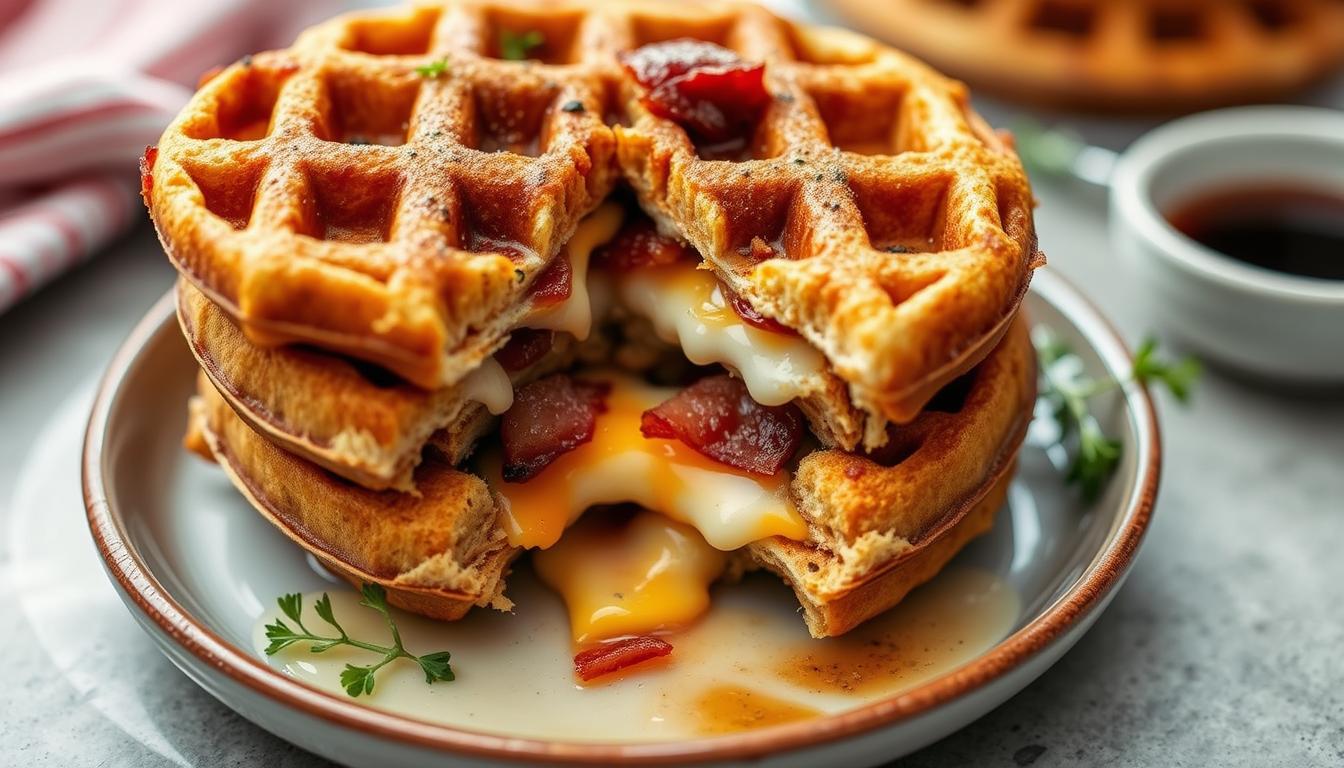
No chemical reaction involved here at all. Whip egg whites and you're trapping tiny air pockets inside a protein structure — those pockets expand when they hit heat, and that expansion is what lifts your batter. It's mechanical, not chemical. This is actually the method behind a lot of those famously light, airy Belgian-style waffles you've probably had at a hotel breakfast bar.
Step-by-Step: Folding Whipped Egg Whites Into Waffle Batter
- Separate your egg whites from the yolks before you touch anything else in the recipe
- Whip the whites to soft or stiff peaks — soft for a gentler lift, stiff if you want serious height
- Fold them into the rest of the batter last, gently, using a spatula — not a whisk, not a mixer
- Stop folding the second it looks combined. Overdo it and you've deflated everything you just worked for
Can You Make Waffles Without Baking Powder Using Yeast?
Yes, though this one's a different animal entirely — more of a plan-ahead move than a quick fix.
How Yeast-Leavened Waffles Differ From Quick-Leavened Ones
Yeast is slow. Batter needs real time to rise, often overnight in the fridge, before it ever sees a waffle iron. What you get in return is a distinct tangy, almost bread-like flavor and interior — this is the method behind classic Belgian liege-style waffles, the kind with the crackly pearl sugar bits baked right in.
When Yeast Is the Better Choice Over Baking Powder Substitutes
If you're craving waffles right now, yeast is not your friend. Skip it. But if you're planning breakfast a day ahead and want something with actual depth of flavor — not just "fluffy and neutral" — yeast delivers something the other three methods simply can't touch.
| Method | Speed | Flavor Impact | Best For |
|---|---|---|---|
| Baking soda + acid | Immediate | Neutral, maybe slight tang from the acid | Quick fixes, already have buttermilk on hand |
| Self-rising flour | Immediate | Neutral | Simplest possible swap |
| Whipped egg whites | Immediate (a bit more effort) | Neutral, extra light texture | Belgian-style fluffiness |
| Yeast | Overnight | Tangy, bread-like | Planning ahead, traditional liege-style |
Best Products for Making Waffles Without Baking Powder
Arm & Hammer Pure Baking Soda (Multi-Pack)
If you're going the soda-and-acid route, this is the obvious pick — chances are you've already got a box in the fridge.
- What it is: A well-known, widely trusted pure baking soda sold in a multi-pack, built for the baking soda and acid substitution method.
- Features: 100% pure sodium bicarbonate. Multi-pack format for better per-box value. Fine, even granulation that mixes into batter smoothly, no clumping.
- Price: Roughly $6–$10 for the multi-pack.
- Pros: Cheap, easy to find anywhere, reacts instantly and reliably the moment it hits an acidic ingredient.
- Cons: Doesn't work alone — needs an acid source in the batter, or you're right back to flat, soapy-tasting waffles.
- Best for: Anyone who's already got buttermilk or yogurt on hand and just needs the leavening half of the equation.
Bob's Red Mill Self-Rising Flour (5 lb Bag)
Honestly? This might be the simplest fix on the whole list. Just… buy different flour.
- What it is: A pre-blended flour with baking powder and salt already mixed in, built to skip the separate-leavening-agent step entirely.
- Features: Combines all-purpose flour, baking powder, and salt in one bag. Big 5-pound size for anyone who bakes often. Consistent leavening baked into every cup, no measuring separate ingredients.
- Price: Roughly $8–$12.
- Pros: Zero guesswork — no measuring out separate leavening agents at all. Works great across waffles, biscuits, pancakes, the whole breakfast lineup.
- Cons: Less control if you need to fine-tune salt or leavening ratios for a specific recipe.
- Best for: Anyone who just wants the simplest possible answer to "no baking powder, now what?"
KitchenAid Classic Stand Mixer (4.5 Quart)
For the whipped egg white route, this is the tool that makes it painless.
- What it is: A countertop stand mixer that's genuinely great at whipping egg whites to stiff, stable peaks for mechanically leavened batter.
- Features: Multiple speed settings for controlled whipping. Comes with a wire whip attachment made for aerating egg whites specifically. Tilt-head design, so you can get in there and add ingredients without a fight.
- Price: Roughly $180–$230 (check current Amazon pricing).
- Pros: Hands-free, consistent results — gets to stiff peaks more reliably than most people manage by hand. Also just a genuinely versatile appliance well beyond waffle mornings.
- Cons: Pricey. Takes up real counter space, too.
- Best for: People who bake often and want one solid tool that handles whipped egg whites (and basically everything else).
Hamilton Beach Hand Mixer (6-Speed)
Don't need a whole stand mixer? Fair. This does the same job for a fraction of the cost and space.
- What it is: A compact, budget-friendly hand mixer built for whipping egg whites without the commitment of a full stand mixer.
- Features: 6-speed settings, whisk attachment included. Lightweight and easy to move around while whipping. Stores in a drawer, not a whole cabinet.
- Price: Roughly $20–$30.
- Pros: Cheap, gets egg whites to stiff peaks just fine, barely takes up any storage room.
- Cons: You're holding it the whole time — more arm fatigue than letting a stand mixer do the work.
- Best for: Occasional bakers who want an affordable way in without buying a full-size appliance.
Red Star Active Dry Yeast (3-Pack)
For anyone going the traditional, plan-ahead liege-style route.
- What it is: A widely available active dry yeast, well-suited to yeast-leavened waffle recipes like Belgian liege-style waffles.
- Features: Individual packets, pre-measured, no mess. Active dry formula that needs proofing in warm liquid before use. Long shelf life if stored properly.
- Price: Roughly $5–$8 for a 3-pack.
- Pros: Delivers that distinct, bakery-style flavor and texture — genuinely something baking powder or soda substitutes just can't replicate.
- Cons: Requires real advance planning. Batter needs time to rise, sometimes overnight. Not for sudden cravings.
- Best for: Bakers interested in traditional, slow-fermented waffles who don't mind the wait.
Step-by-Step: How to Make Waffles Without Baking Powder
Choosing the Right Substitution Method for Your Situation
Match the method to your timeline, basically. Need waffles in the next twenty minutes? Baking soda-plus-acid or self-rising flour, both work immediately. Want extra lightness and don't mind a little more hands-on effort? Whipped egg whites. Planning breakfast for tomorrow and want something with real depth? Yeast, no question.
Mixing and Cooking the Batter
Combine your dry ingredients separately from your wet ones first, then merge — same rule no matter which method you're using. Don't overmix, ever, regardless of which leavening route you picked. And preheat that waffle iron fully before batter goes anywhere near it. This matters more than usual here, honestly, because both the chemical reaction (baking soda) and the mechanical one (whipped egg whites) start losing steam the longer that batter just sits around waiting.
Watching for Doneness Without Baking Powder's Predictable Rise

Baking powder gives you a fairly predictable puff every time. Substitutes? Less predictable. So don't just eyeball height and call it done — watch for steam slowing down, and check for that deep golden color instead. That combination's a far more reliable doneness signal than rise alone, especially with methods that behave a little differently batch to batch.
Common Mistakes When Making Waffles Without Baking Powder
Forgetting to Add Acid When Substituting Baking Soda
Same mistake, every time, and it's avoidable. Soda without acid means poor rise and that unmistakable soapy, metallic aftertaste nobody wants on their breakfast plate. Always pair it. Always.
Letting Batter Sit Too Long Before Cooking
Both the baking soda reaction and the trapped air in whipped egg whites are working on borrowed time. Let the batter sit too long on the counter and you're just watching your leavening power slowly disappear before it ever hits the iron.
Overmixing After Folding in Whipped Egg Whites
This one stings because it happens right at the finish line. You whip the whites perfectly, fold them in a little too aggressively, and — poof — all that trapped air's gone. Dense waffles despite doing all the hard work. Fold gently. Stop early. Every time.
Using Self-Rising Flour While Still Adding Extra Salt or Leavening
Easy mistake if you're following an old recipe out of habit. Self-rising flour already accounts for both salt and leavening — add more on top and you'll end up with something either way too salty or way too bubbly and uneven. Skip the extra additions entirely when self-rising flour's in the mix.