What Baking Powder Actually Does in Waffle Batter
Baking powder works in waffles because it does one job, twice. Hits liquid, releases gas. Hits heat, releases more gas. That's it. Two shots of carbon dioxide instead of one, and that's the difference between a waffle that's flat and sad and one that's actually light inside with a crisp shell outside.
Here's the thing: waffles don't have time to sit around and rise slowly. You mix, you pour, you close the lid, and three to five minutes later you're eating. There's no room for a slow yeast rise unless you're specifically making Belgian-style yeasted waffles (more on that later). Baking powder solves the time problem. It's fast, it's reliable, and it's built for exactly this kind of quick-cook situation.
The Double-Acting Reaction Explained
Most baking powder sold today is "double-acting." That's not marketing fluff — it actually describes two separate chemical reactions.
- Reaction one kicks off the moment liquid hits the dry mix. Monocalcium phosphate (the acid) meets sodium bicarbonate (the base), and boom — a little burst of CO2 right there in the bowl. Watch closely and you'll catch tiny bubbles forming on the surface. Not dramatic. Just enough to know it's working.
- Reaction two doesn't happen until heat gets involved. A second acid compound kicks in once the batter hits the hot iron, releasing more gas exactly when the batter needs structure to trap it.
So why does any of this matter? Because reaction one, on its own, isn't enough. Not even close. If that were the whole story, half your lift would burn off in the bowl before the batter ever saw the iron. Flat waffles. Sad waffles. The second reaction — the heat-triggered one — is what actually gives waffles their lift, right when it counts.
Why Waffles Need Baking Powder More Than Pancakes Do
Pancake batter and waffle batter aren't twins. They just look alike from across the kitchen. Waffle batter usually carries more fat — oil, melted butter, sometimes both — and often more sugar too. That fat coats the flour proteins, which sounds harmless enough, but it actually makes the batter lazier about rising on its own. So it needs a bigger push. That's baking powder's job here.
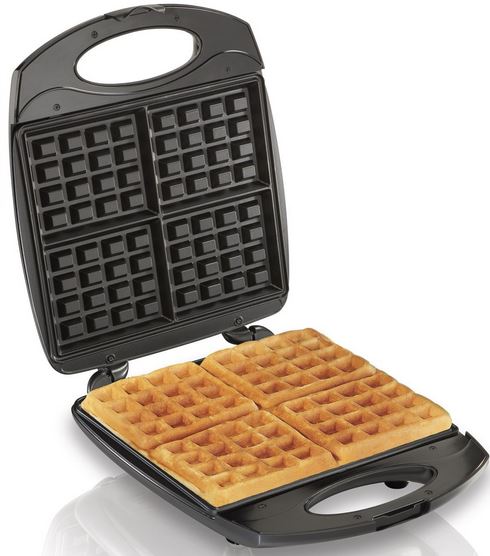
There's also the cooking environment to think about. A waffle iron is a sealed, pressurized little oven. Once you close that lid, the batter is trapped between two hot plates with nowhere to expand except up against the grid pattern. That contained heat and pressure is exactly the setup where a heat-activated second reaction (the one baking powder gives you) does its best work. Pancakes cook open-face on a flat griddle — no lid, no pressure, no trapped steam. Different job, different leavening demands.
The result of getting this right? A crisp, golden exterior with a light, almost airy interior. That contrast is the whole point of a good waffle. Skip the baking powder, or skimp on it, and you lose that contrast entirely.
How Baking Powder Compares to Other Leaveners in Waffles
Baking powder isn't the only leavening option for waffles, but it's the default for a reason — it's self-contained, fast, and doesn't require any extra planning. Baking soda and yeast can both work too, just not the same way, and not always as easily.
Baking Powder vs. Baking Soda in Waffle Recipes
Baking soda is pure base. No acid included. That means it needs something acidic in the batter — buttermilk, yogurt, lemon juice — to actually react and produce gas. No acid, no rise. Simple as that.
Baking powder, on the other hand, comes pre-loaded with its own acid. That's the whole difference — it's why it's "powder" and not just soda. Which means it'll work fine in a plain milk-based batter, no buttermilk or lemon juice required.
Plenty of recipes throw in both anyway. Why bother? Because baking soda does one thing baking powder just can't — it neutralizes acid and pushes browning further. Got buttermilk in the recipe? A pinch of baking soda alongside your baking powder gets you better color on the outside and knocks back that faint tang straight baking powder sometimes leaves behind.
| Baking Powder | Baking Soda | |
|---|---|---|
| Contains its own acid | Yes | No |
| Needs acidic liquid to work | No | Yes |
| Common waffle use | Primary leavener | Secondary, paired with acid |
| Effect on browning | Mild | Stronger browning |
| Flavor impact | Neutral-ish | Can taste soapy if overused |
Baking Powder vs. Yeast in Waffle Recipes
Yeast waffles are a whole different category — think classic Belgian waffles, the kind with a slightly tangy flavor and huge, uneven air pockets. Yeast produces CO2 through fermentation, which takes hours, not minutes. You're mixing the batter the night before or letting it sit for an hour-plus before cooking.
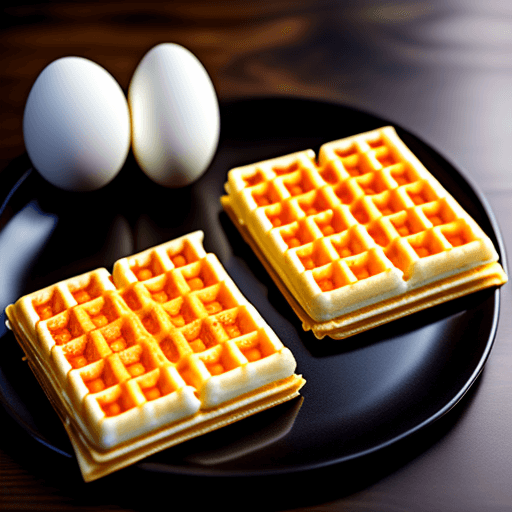
Baking powder skips all of that. Mix, pour, cook. That's the whole appeal for a weekday breakfast or a quick weekend batch. Most home cooks reach for baking powder simply because nobody wants to plan a waffle twelve hours in advance.
Texture-wise, they're not interchangeable either. Yeasted waffles tend to be chewier with bigger, irregular holes. Baking-powder waffles are lighter, more uniform, and crisper on the outside. Neither is "better" — it depends what you're going for and how much time you've got.
Single-Acting vs. Double-Acting Baking Powder for Waffles
Single-acting baking powder reacts once, immediately on contact with liquid. That's a problem for waffles because you need some of that reaction saved up for when the batter hits the iron. If it all fizzles out in the mixing bowl, you're cooking flat batter.
Double-acting is the standard for a reason. It's what you'll find on grocery shelves almost exclusively at this point, and it's what every waffle recipe assumes you're using unless stated otherwise. Stick with double-acting. Don't overthink this one.
What Happens If You Use Too Much or Too Little Baking Powder in Waffles
Get the amount wrong in either direction and you'll notice immediately — waffles are unforgiving that way.
Signs You've Used Too Much Baking Powder
Too much baking powder tastes exactly how it sounds: metallic, bitter, almost soapy. You'll get a weird aftertaste that lingers, and honestly it ruins the whole batch. Beyond flavor, over-leavened batter can rise too fast, trap too much gas, and then collapse before it fully sets — leaving you with a waffle that looked promising in the iron and deflated the second you opened the lid.
Signs You've Used Too Little Baking Powder
Not enough, and you get the opposite problem. Dense. Flat. Chewy in a way that isn't pleasant. The waffle won't crisp up properly on the outside either, because there's not enough internal structure pushing against the grid pattern. It just kind of sits there, heavy and sad on the plate.
The Standard Ratio for Waffle Recipes
Most recipes land around 1 to 2 teaspoons of baking powder per cup of flour. That's the range you'll see across the majority of waffle recipes, give or take depending on other ingredients (buttermilk-based recipes sometimes dial it back slightly since they lean on baking soda too).
A few things shift that ratio:
- Higher altitude means gas expands faster, so you'll often want to reduce baking powder slightly to avoid over-rising and collapse.
- Humid climates can affect how the powder performs, since moisture in the air can slowly degrade its potency even before you open the container.
- Recipes with a lot of egg whites (whipped separately and folded in) sometimes reduce chemical leavener slightly since the eggs are doing part of the lifting.
Choosing the Best Baking Powder for Waffles
Not every baking powder on the shelf performs the same, and if you're making waffles regularly, the differences actually matter — aftertaste, aluminum content, and freshness all affect your final batch. Here's a rundown of solid, currently available options on Amazon.
Clabber Girl Double Acting Baking Powder, 8.1 oz
Price: Roughly $3–$6 depending on pack size
This is the one you've probably already got in your pantry without thinking twice about it. Clabber Girl has been around for generations, and it's a balanced double-acting formula — reacting about 30% in the bowl and 70% in the oven (or in this case, the iron). That heavier weighting toward the heat-activated reaction is genuinely useful for waffles, since it means more of the lift happens exactly when the batter needs it.
Features:
- Gluten free and Kosher
- Pop-top resealable canister
- Available as a single can or in bulk multi-packs
Pros:
- Cheap, easy to find, basically everywhere
- Consistent performance batch after batch
- The 70/30 reaction split favors that second, heat-triggered rise
Cons:
- Contains sodium aluminum sulfate — some people pick up on a faint metallic taste, especially in lighter batters
Best for: Regular home cooks who just want something dependable without fussing over ingredients. If you're making waffles every Sunday and don't want to think about it, this works.
Davis Double Acting Baking Powder, 8.1 oz
Price: Around $6.40
Davis has that old-school yellow-and-red can that hasn't changed in over a hundred years — and honestly, neither has the formula much. It's a legacy brand, the kind your grandmother probably used, and it still does the job well.
Features:
- Pop top can with a leveling edge built into the lid
- Vegan, vegetarian, kosher, halal, and gluten free
- Resealable 8.1 oz canister
Pros:
- That leveling edge is genuinely handy — accurate measuring matters more than people realize for waffle rise
- Long shelf life
- Trusted, well-reviewed brand with a long track record
Cons:
- Standard aluminum-based formula, so same aftertaste consideration as Clabber Girl
Best for: Bakers who like the classic, no-frills option and want built-in help measuring precisely.
Bob's Red Mill Baking Powder, 14 oz
Price: Roughly $7–$9
Bob's Red Mill markets this one directly for pancakes and waffles, which tells you something. It's aluminum-free, which is the big differentiator here — no metallic aftertaste to worry about, even in delicate, subtly flavored batters.
Features:
- Gluten free, vegan, kosher
- No added aluminum
- Larger 14 oz size compared to most competitors
Pros:
- Cleaner flavor, no bitter or metallic notes
- Bigger container means fewer repurchases if you bake often
- From a brand people generally trust for quality ingredients
Cons:
- Costs more per ounce than the basic grocery-store brands
Best for: Anyone who's noticed that aftertaste before and wants to avoid it going forward — or anyone just trying to keep ingredients a bit cleaner overall.
Rumford Baking Powder, 8.1 oz
Price: Around $3–$4
Rumford is aluminum-free too, but at a price point closer to the basic brands rather than the premium ones. It's formulated as an all-phosphate baking powder specifically to avoid that bitter aftertaste — that's actually part of their pitch, and it holds up.
Features:
- Made with monocalcium phosphate, sodium bicarbonate, and corn starch
- Gluten free, wheat free, OU Kosher
- Sold individually or in multi-packs
Pros:
- No bitter aftertaste
- Aluminum-free without the premium price tag
- Well-reviewed, reliable performance
Cons:
- Smaller can size means more frequent reordering for heavy use
Best for: People who want the aluminum-free benefit without paying Bob's Red Mill prices. Solid middle-ground pick.
Gefen Baking Powder Aluminum Free, 8 oz (2-Pack)
Price: Roughly $5–$10 for the pack of two
This one's a bit less common on grocery shelves but easy to grab on Amazon. It's aluminum-free and also cornstarch-free, which matters if anyone in the house has a corn sensitivity — that's not something most other brands on this list offer.
Features:
- Two resealable 8 oz canisters per order
- Gluten free, kosher certified
- No cornstarch filler
Pros:
- Corn-free formula is genuinely rare in this category
- Two cans means a built-in backup so you're not caught without any mid-recipe
- Aluminum-free, clean taste
Cons:
- Less brand recognition than the bigger names, so it might feel unfamiliar at first
Best for: Households dealing with corn allergies or sensitivities, or anyone who just wants a spare can on hand without a separate shopping trip.
How Storage and Freshness Affect Baking Powder's Leavening Power in Waffles
Old baking powder is one of the most common reasons waffles turn out flat, and most people don't even suspect it. The stuff loses potency over time — slowly at first, then noticeably once it's past its prime.
How to Test If Your Baking Powder Is Still Active
Drop a teaspoon into a small cup of hot water. Fresh, active baking powder will fizz up immediately, fast and vigorous. If you get a weak trickle of bubbles — or nothing at all — it's done. Toss it and grab a new can. This test takes about ten seconds and it'll save you from a batch of flat waffles before you've even started mixing.
Proper Storage to Preserve Leavening Strength
Keep it in an airtight container, somewhere cool and dry. Moisture is the enemy here — even small amounts of humidity in the air can slowly trigger that first reaction inside the can, using up potency before you ever open it. Most baking powder holds strong for about 6 to 12 months after opening, sometimes longer if storage conditions are good. Past that window, test before you trust it.
Tips for Getting the Best Rise When Using Baking Powder in Waffle Batter
Good baking powder only gets you halfway there. How you handle it matters just as much.
Measuring Baking Powder Accurately
Level, not heaping. A heaping teaspoon can be nearly double the intended amount, and that's exactly the overdose that leads to bitter, collapsed waffles. Use a proper measuring spoon, level it off with the flat edge of a knife, and don't eyeball it — this is one spot where precision actually pays off.
Mixing Technique to Preserve Leavening Power
Overmixing waffle batter does two bad things at once: it develops gluten (leading to tougher waffles) and it knocks gas bubbles out of the mix before they ever get a chance to do their job. Fold the wet and dry ingredients together just until combined — a few lumps are completely fine, better than fine actually. Letting the batter rest for five to ten minutes before cooking can also help, giving the flour time to hydrate and the initial reaction to settle in evenly.
Preheating and Waffle Iron Temperature
The iron needs to be fully preheated before the batter goes in — that heat-activated second reaction depends on it. Pour batter into a lukewarm iron and you lose that critical push right when you need it most, ending up with waffles that are pale, underdeveloped, and honestly kind of limp. Most irons have an indicator light or beep for this exact reason. Trust it, don't rush it.